
Darius III
Darius III faced Alexander’s invasion. The fall of his power is connected with the empire’s collapse; subsequent claims to kingship are treated separately.
Reign: 336–330 BCE
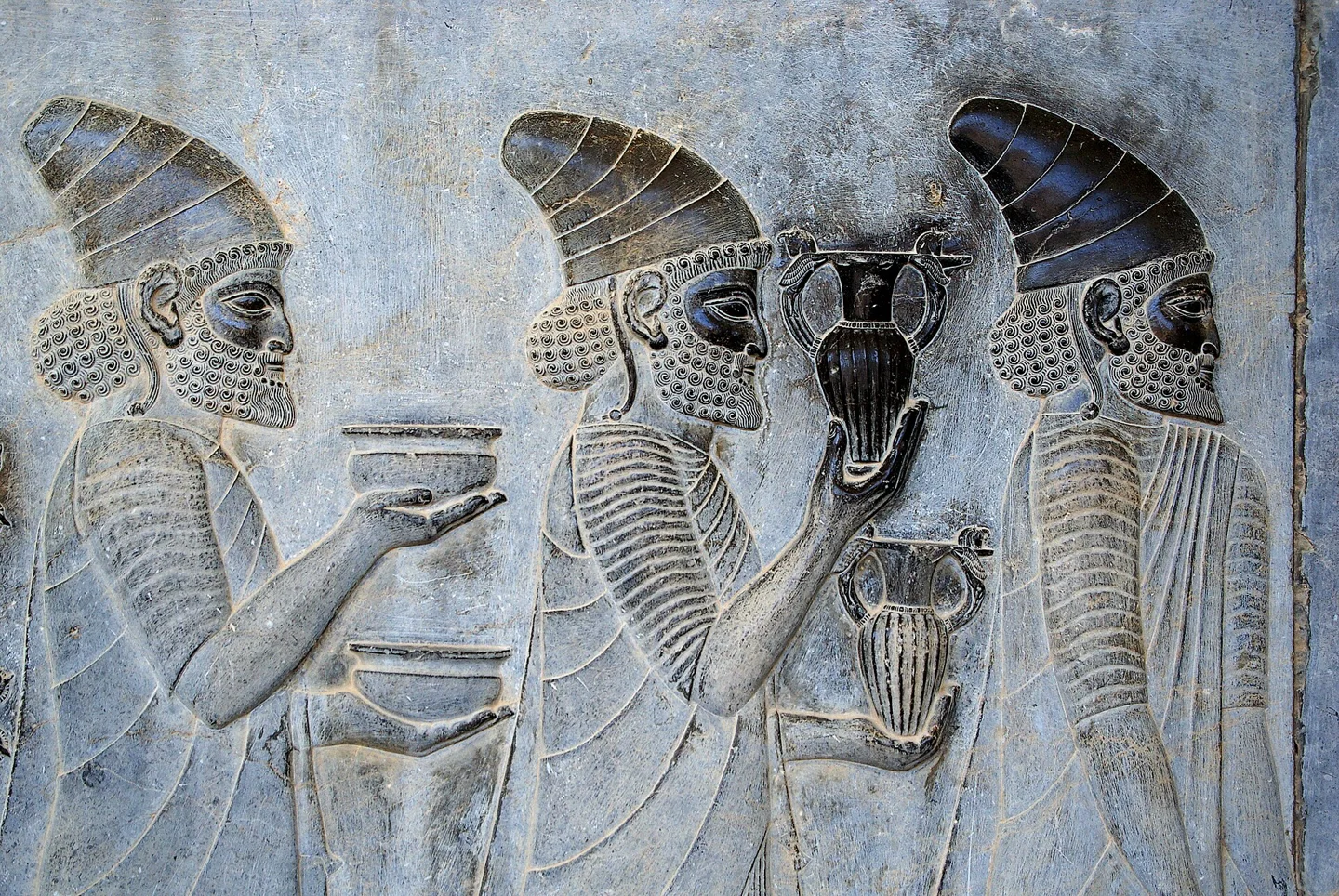
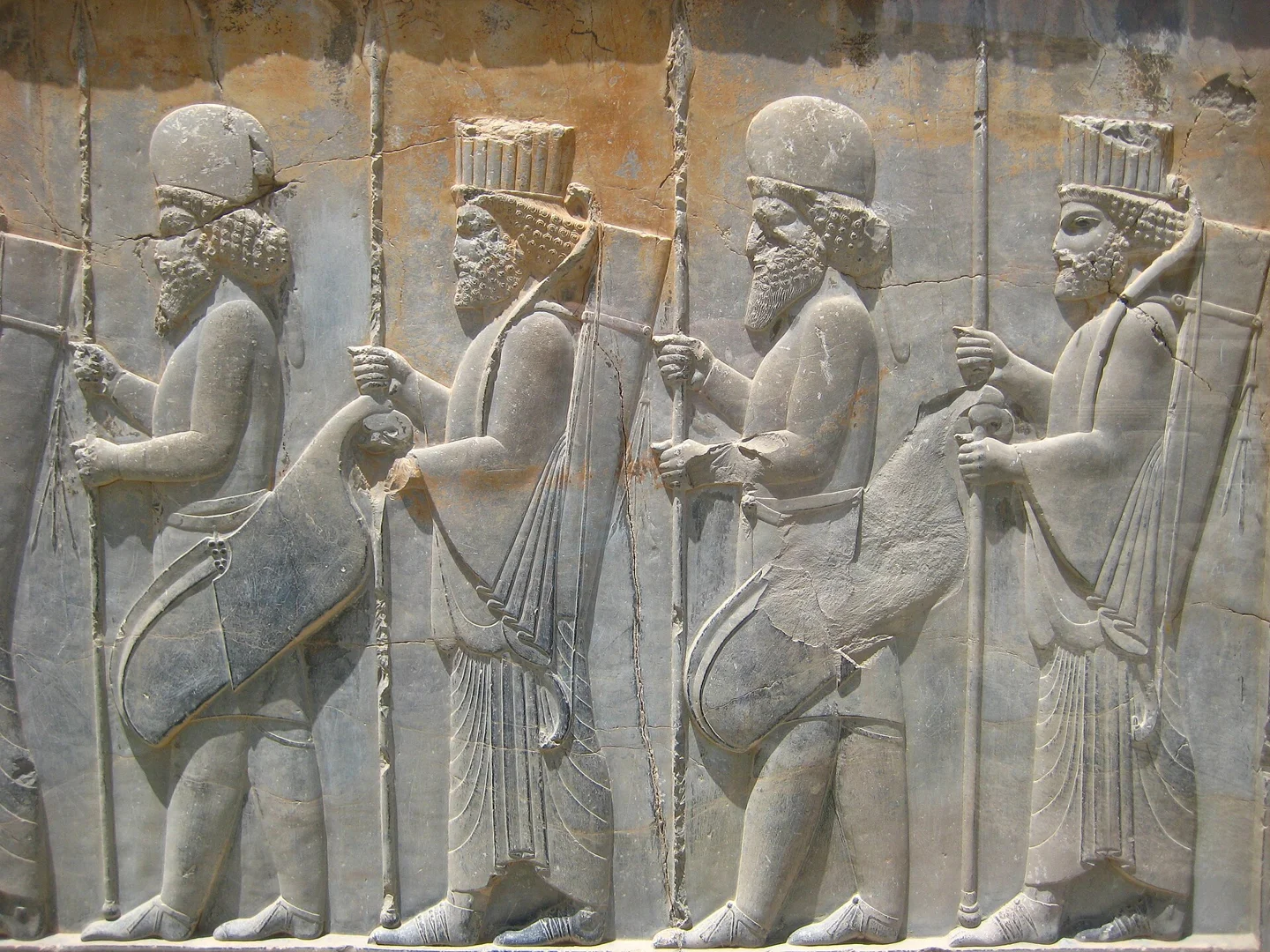
These cultural and symbolic images do not depict Dorehami members or events.
Image and licence
File:Persepolis stairs of the Apadana relief.jpg — Phillip Maiwald (Nikopol) — CC BY-SA 3.0 · WebP / crop

File:Persepolis stairs of the Apadana relief02.JPG — Taranis-iuppiter — CC BY-SA 3.0 · WebP / crop

Object images show the period’s heritage and are not necessarily authenticated portraits of this person.
Context and a reading path
Study Darius III through the war with Alexander and the collapse of central Achaemenid power. A ruler’s fall does not make languages, skills and social life disappear overnight. Political and cultural change do not proceed at the same pace.
How to read the evidence
Distinguish maps, movement routes and an author’s claims about troop numbers. Military outcomes can be described, but feelings, dialogue and personal intentions must not be invented as facts. Visual reconstructions should be labeled as reconstructions.
A question to discuss
What may continue after a state falls, and what evidence would help us study that continuity?
The answer need not be settled beforehand. First note what the source actually tells us, then separate questions from guesses. Children can draw an object or building from the period; an imagined picture should not be presented as historical evidence.
Sources and further reading
Content reviewed: 19 October 2026
Back to the Achaemenids
Cyrus II: Cyrus the Great
About 559–530 BCE
Cambyses II
530–522 BCE
Bardiya and the Gaumata question
522 BCE
Darius I: Darius the Great
522–486 BCE
Xerxes I
486–465 BCE
Artaxerxes I
465/464–424/423 BCE
Xerxes II
424/423 BCE
Sogdianus
424/423 BCE
Darius II
about 423–404 BCE
Artaxerxes II
about 404–359/358 BCE
Artaxerxes III
359/358–338/337 BCE
Arses: Artaxerxes IV
338–336 BCE
Bessus: a claimant after Darius III
330–329 BCE