
Elam
Elam was not one continuous, uniform state. Susa, Anshan and surrounding regions played changing roles. Tablets and archaeology are essential to reconstructing this history.
Several periods across the millennia BCE
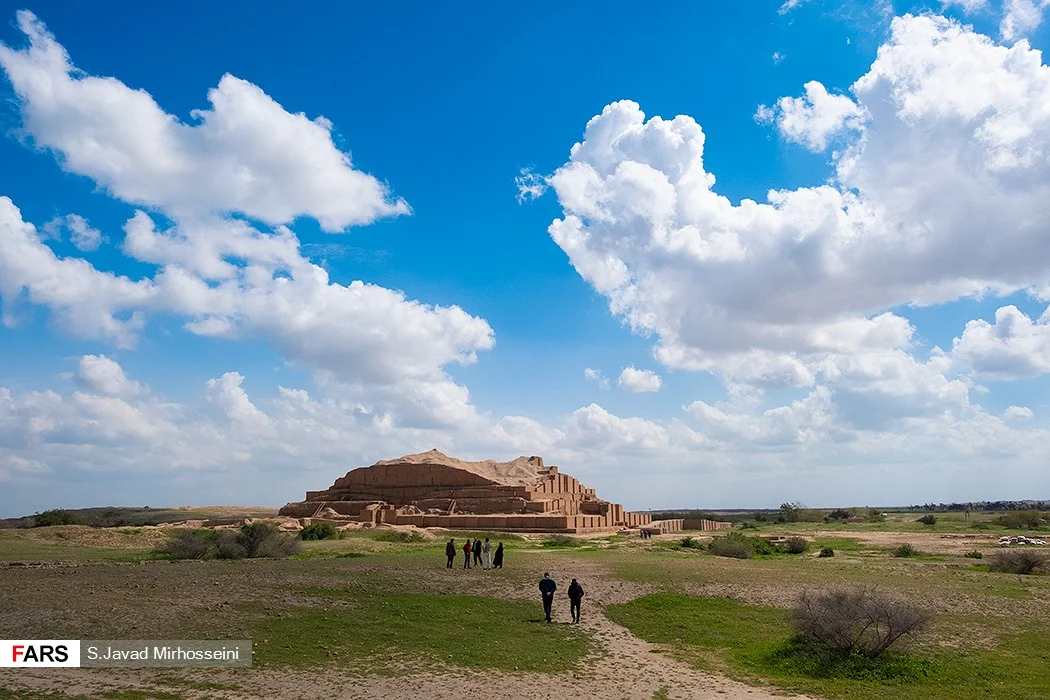
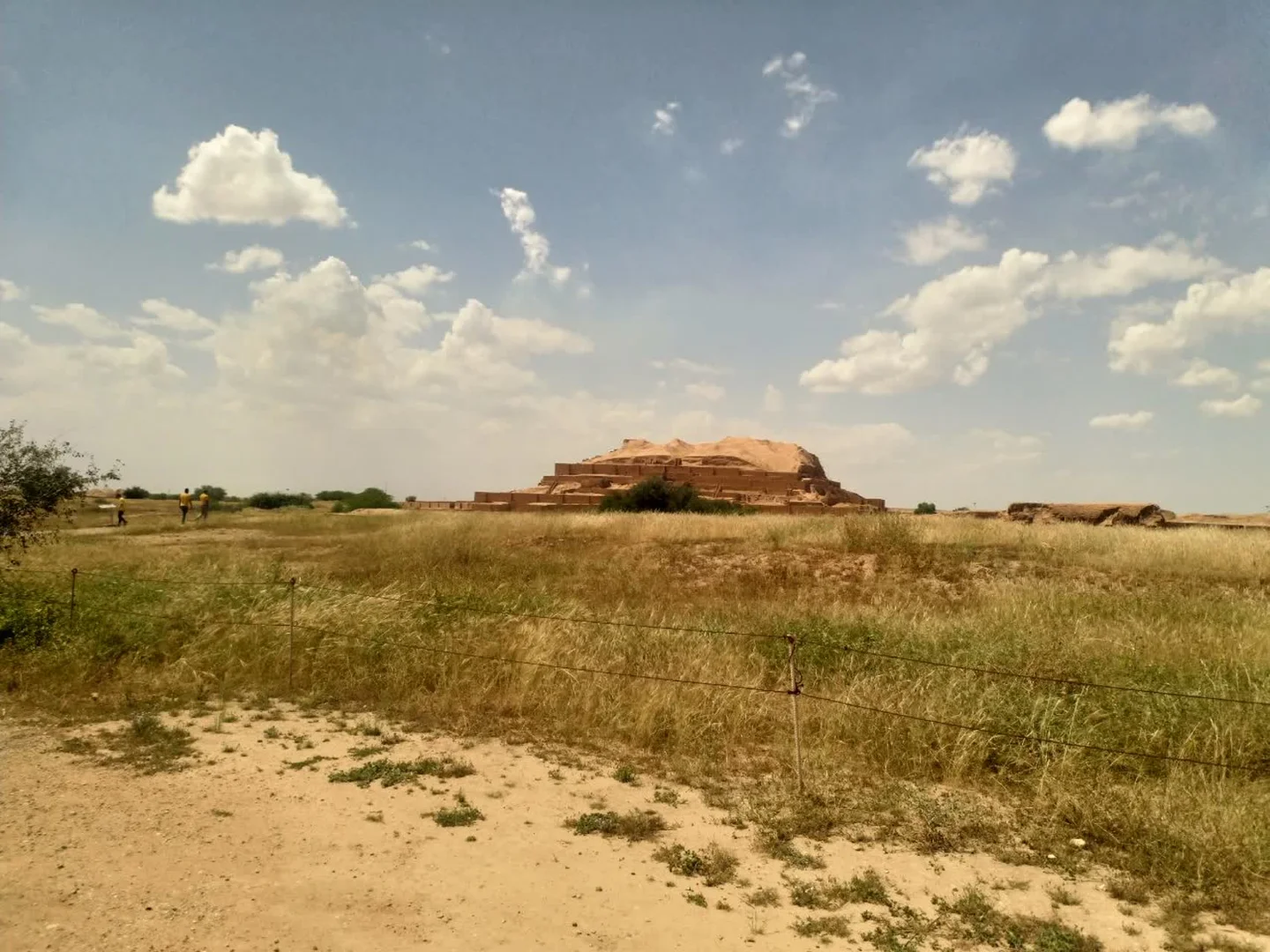
These cultural and symbolic images do not depict Dorehami members or events.
Image and licence
File:Chogha Zanbil 20190327 01.jpg — S.Javad Mirhosseini — CC BY 4.0 · WebP / crop

File:Chogha Zanbil Area.jpg — Saeedhamedian — CC0 · WebP / crop

What evidence tells us about Elam?
Elam should not be imagined as a state with unchanged borders across several millennia. Archaeology compares material from Susa, Anshan and neighbouring areas; cultural similarities need not define political territory. Much of the excavated evidence also comes from Susa. When reading an account, ask whether its conclusion rests on an inscription, an excavation or a comparison of objects. Abundant finds at one site do not automatically represent every community or region.
Source: Iranica — The archaeology of Elam (1998; updated 2016)
Anshan: lowlands and highlands
Anshan named both a region in Fars and its principal city. Identifying the city with Tall-e Malyan rests on evidence including inscribed bricks and administrative texts, rather than name resemblance alone. Sources also preserve the title king of Anshan and Susa. Study the Susian plain alongside the Fars highlands: a single point on a map cannot replace an investigation of connections between regions, routes and changing centres of authority.
Periods and Susa’s changing role
Researchers commonly organise the evidence into Old, Middle and Neo-Elamite periods. These labels do not imply three uniform states or peaceful transfers of authority. Iranica’s history of Susa distinguishes the Proto-Elamite phase from later periods and explains the city’s importance to the surviving evidence. In reading notes, record period, location and evidence together. This helps prevent a chronology for Susa from being extended without justification to every region associated with Elam.
Source: Iranica — Susa during the Elamite period (2008; updated 2018)
Tablets: accounting and its limits
Iranica’s Proto-Elamite entry examines numerical and administrative records, including accounts involving grain, livestock and workers. Such documents raise questions about resource management but do not replace workers’ personal accounts or literature. Distinguish Proto-Elamite writing, Linear Elamite and the Elamite language written in cuneiform. This introduction uses the older reference article to discuss document functions; it does not make a new claim about the latest decipherment research on these writing systems.
Tchogha Zanbil: architecture and ritual
Tchogha Zanbil is a sacred complex with a ziggurat and successive enclosures. UNESCO dates its foundation to around 1250 BCE and describes mud-brick construction faced with baked brick. The surviving structure does not retain its original height; a modern photograph is not a reconstruction of the ancient city. This page’s two photographs show modern views. Looking at the building’s levels and surroundings is an optional observation exercise, not an announced trip.
Source: UNESCO — Tchogha Zanbil
A silver bull: observation and interpretation
The Met’s kneeling bull holding a spouted vessel is a silver Proto-Elamite object dated around 3100–2900 BCE. Its body and clothing combine human and animal traits. The museum describes its function as uncertain, so it cannot confidently be labelled a toy or equipment for one particular ritual. Follow the source link and record visible features before listing possible interpretations separately. This object is much older than Tchogha Zanbil; place each work within its own period.
Source: The Met — Kneeling bull holding a spouted vessel, 66.173
Assyrian wars: destruction and continuity
In the seventh century BCE, Assyrian wars and interventions severely damaged Elamite centres of power. Iranica’s historical overview places Ashurbanipal’s sack of Susa in 646 BCE, yet rejects complete destruction as a sufficient account and discusses later rulers. Separate a royal inscription’s victory message from the historical outcome. Political change does not imply the immediate disappearance of people, language or every regional institution. Those questions require evidence beyond the conqueror’s account of success.
Elamite beyond the end of a state
Elamite cuneiform texts continue into the Achaemenid period; the language’s phases do not exactly match the succession of rulers. Iranica’s language entry discusses change over time and uncertain relationships with other languages. Shared geography alone does not establish linguistic identity. For optional family reading, write place, government and language in three columns and find one piece of evidence for each. This is a suggested reading exercise rather than a real Dorehami event.
How to explore this period
Read the sources with attention to author, date and evidence. Regional branches may have different time boundaries.
Connect government, succession, towns, architecture, trade, art and everyday life. A ruler does not represent the whole population.
Sources and review date
Sources checked on 22 October 2026.
- Iranica — The archaeology of Elam (1998; updated 2016)
- Iranica — Anshan (1985; updated 2013)
- Iranica — Susa during the Elamite period (2008; updated 2018)
- Iranica — Proto-Elamite (1998; updated 2016)
- UNESCO — Tchogha Zanbil
- The Met — Kneeling bull holding a spouted vessel, 66.173
- Iranica — The history of Elam (1998; updated 2016)
- Iranica — Elamite language (1998; updated 2016)