
The Medes
Greek narratives about the Medes need comparison with Assyrian and Babylonian evidence. Royal chronology and the extent of their power remain debated.
Mainly the seventh and sixth centuries BCE
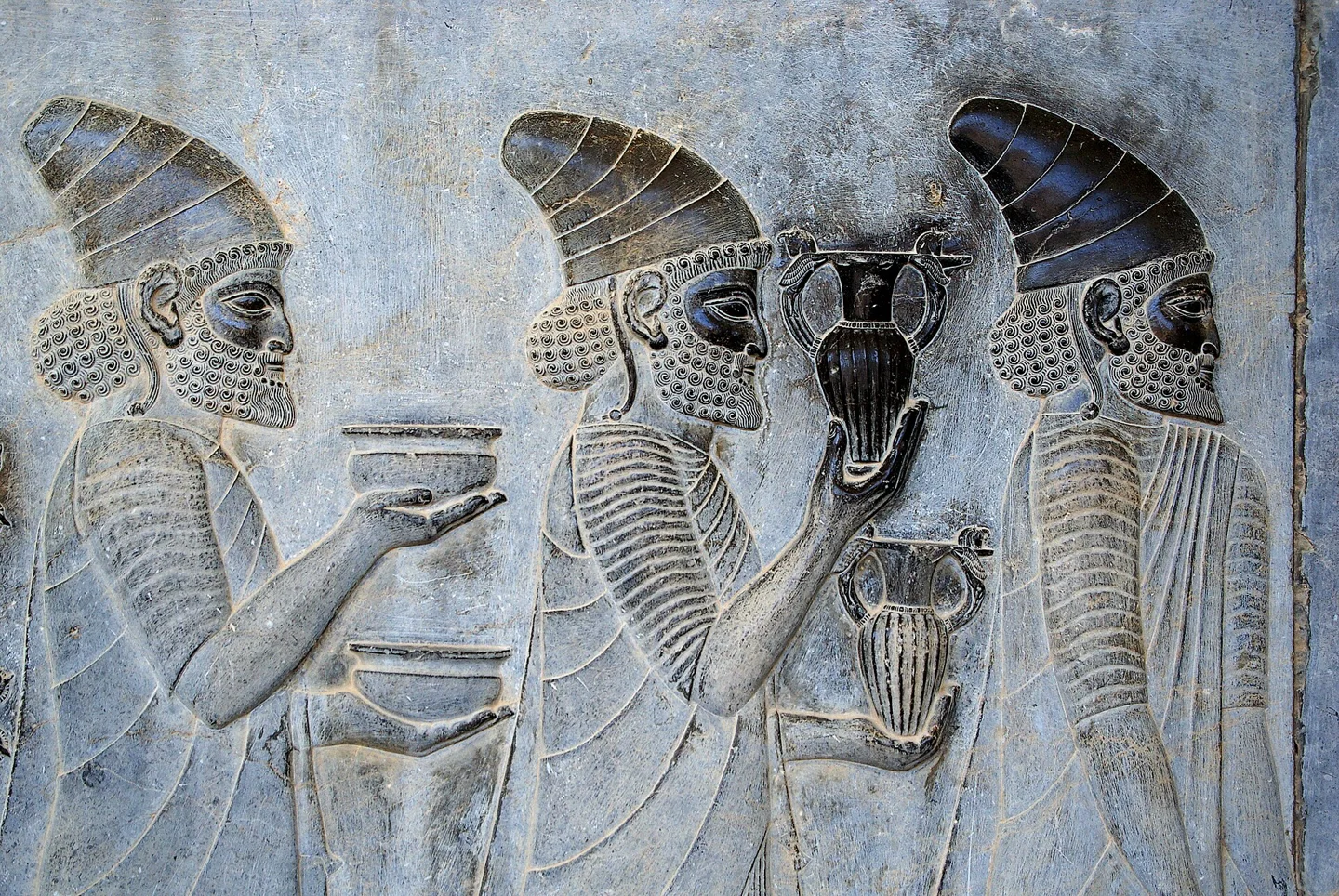
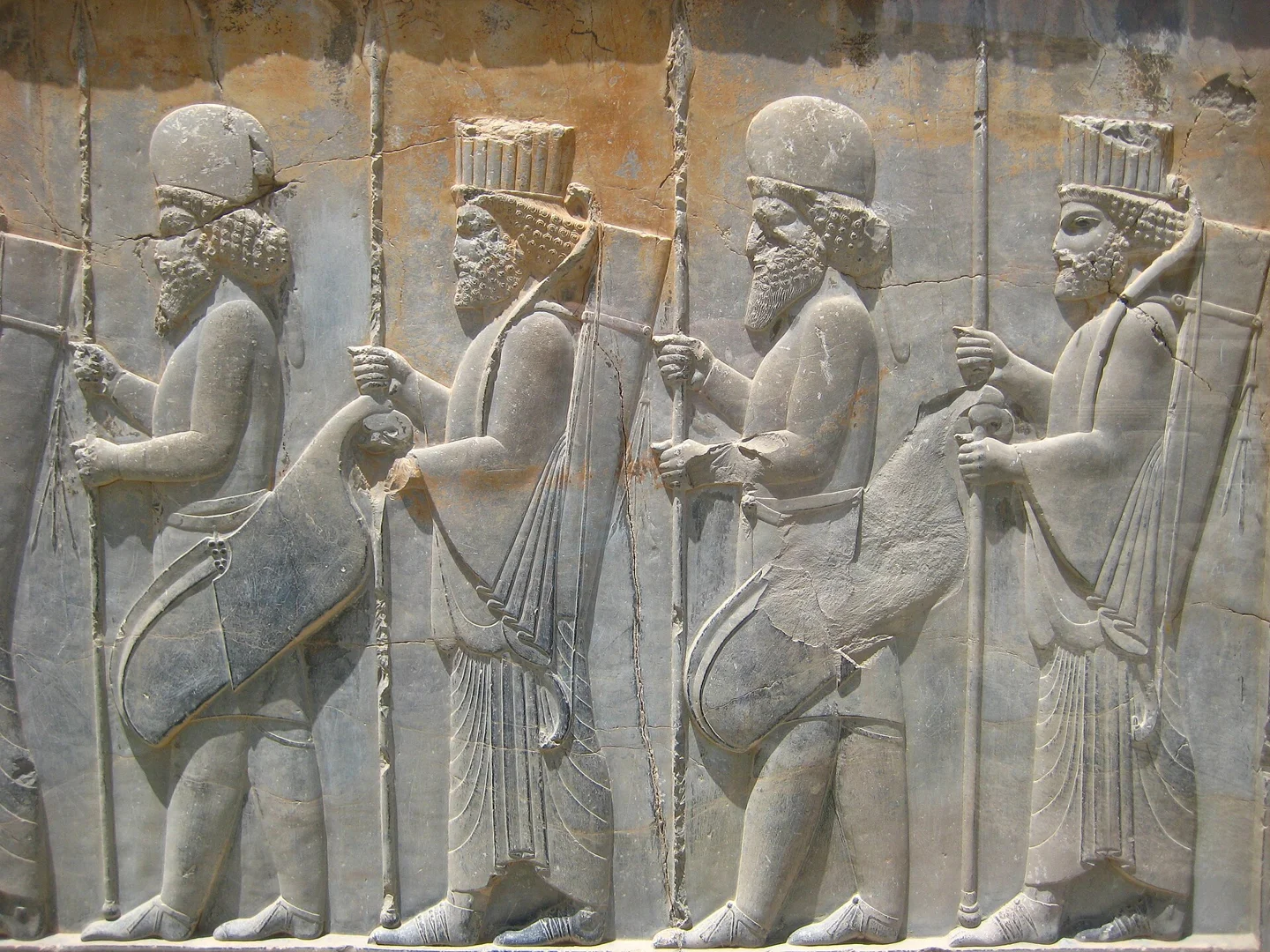
These cultural and symbolic images do not depict Dorehami members or events.
Image and licence
File:Persepolis stairs of the Apadana relief.jpg — Phillip Maiwald (Nikopol) — CC BY-SA 3.0 · WebP / crop

File:Persepolis stairs of the Apadana relief02.JPG — Taranis-iuppiter — CC BY-SA 3.0 · WebP / crop

Which voices tell us about the Medes?
Median history does not come from a single archive. Assyrian annals and letters, Babylonian chronicles, Herodotus’ later narrative and archaeology answer different questions and have different limits. Of the four kings Herodotus arranges in one dynasty, only Cyaxares and Astyages are also named in cuneiform texts. “A source says” is therefore not the same as “several independent sources confirm.” This page keeps the source and its distance from the event visible, without filling the absence of a known Median archive with invented detail.
Source: Encyclopaedia Iranica — Media, Encyclopaedia Iranica — Median and Achaemenid archaeology, Encyclopaedia Iranica — Median art and architecture
From local rulers to Assyrian pressure
Assyrian texts first mention the Medes in the ninth century BCE. Later campaign accounts refer to many “city rulers” and tribute, suggesting multiple regional centres rather than one unified state with fixed borders. Assyria created provinces and bases in some areas, moved populations and demanded horses, livestock, textiles and metal, yet its control across the Zagros was not permanent. Numbers in royal annals also belong to a display of victory and need comparison with geography and other texts.
Source: Encyclopaedia Iranica — Media
The seventh-century revolt and state formation
Around 672 BCE, Assyrian texts name Kashtariti and other local rulers in a revolt against Assyria. Iranica judges the resistance successful and Media recognised as a separate kingdom, while also stating that its precise extent is unknown and not every Median region belonged to one state. Identifying Kashtariti with the Greek Phraortes is a scholarly proposal, not a certainty. Military alliance, release from tribute and centralised government should be treated as separate stages or questions.
Source: Encyclopaedia Iranica — Media
Herodotus’ four kings and disputed chronology
Herodotus places Deioces, Phraortes, Cyaxares and Astyages in one family line and assigns lengths to their reigns. Scholars have long tried to match them with people in Assyrian texts, but manuscript differences and chronological conflicts prevent a certain table. The seven coloured walls of Ecbatana and Cyaxares’ military organisation should likewise be identified as Herodotus’ account, not a contemporary Median record. This caution does not discard the Greek narrative; it distinguishes its role from cuneiform evidence closer to the events.
Source: Encyclopaedia Iranica — Media, Encyclopaedia Iranica — Ecbatana
Ashur, Nineveh and the Babylonian alliance
The Babylonian chronicle for 616–609 BCE is a central source for the wars that ended Assyrian rule. Cyaxares’ forces captured Ashur in 614 and then allied with Nabopolassar of Babylon; in 612 the two armies besieged and took Nineveh. For the sequence of events this text is closer to the war than Herodotus, but it is still not a complete account of residents’ experience or each ally’s contribution. The fall of the Assyrian empire did not mean that Assyrian people, languages or every local institution disappeared.
Source: Encyclopaedia Iranica — Media, The British Museum — Babylonian Chronicle for 616–609 BCE, 1896,0409.6
Ecbatana: route, capital and later layers
Ecbatana is securely identified with modern Hamadan, and its position by Mount Alvand controlled an important east–west route through the Zagros. Sources call it Media’s capital, but much that has been observed or excavated belongs to Achaemenid, Parthian or later periods. Herodotus’ seven walls are not an excavated Median city plan. A mud-brick wall, column base or gold tablet must be dated and assessed within its own layer; a famous place does not automatically date every object found there.
Source: Encyclopaedia Iranica — Ecbatana
Nush-i Jan and the problem of “Median art”
Nush-i Jan, about sixty kilometres south of Hamadan, preserves Iron Age temples, a columned hall and a fort. The Met’s bridge-spouted jar comes from the site and dates to about the seventh century BCE. The museum stresses that this vessel form appears in different contexts and belongs to shared material traditions, not an exclusive ethnic marker. Iranica also warns that confidently labelling a site or style wholly “Median” is hazardous. This page’s images are later Achaemenid reliefs: useful for comparing dress and representation, but neither photographs of the Median kingdom’s people nor reconstructions of their lives.
Source: Encyclopaedia Iranica — Median and Achaemenid archaeology, Encyclopaedia Iranica — Median art and architecture, The Met — Bridge-spouted jar from Tepe Nush-i Jan, 1974.105.1
Astyages, Cyrus and continuity after 550
The Nabonidus Chronicle reports that Astyages marched against Cyrus of Anshan, his army rebelled and handed him over, and Cyrus carried Ecbatana’s wealth to Anshan. The event is usually dated to 550 or 549 BCE. The end of the Median dynasty did not remove Medes from the new order: Ecbatana became an Achaemenid summer residence and treasury, while Median nobles and soldiers appear in later sources. For optional family study, make three columns for contemporary text, later narrative and object/site. This is an educational suggestion, not an announced Dorehami event.
Source: Encyclopaedia Iranica — Media, Encyclopaedia Iranica — Ecbatana, The British Museum — Nabonidus Chronicle, Sp II 964
How to explore this period
Read the sources with attention to author, date and evidence. Regional branches may have different time boundaries.
Connect government, succession, towns, architecture, trade, art and everyday life. A ruler does not represent the whole population.
Sources and review date
Sources checked on 22 October 2026.
- Encyclopaedia Iranica — Media
- The Met — Iran, 1000 B.C.–1 A.D.
- Encyclopaedia Iranica — Median and Achaemenid archaeology
- Encyclopaedia Iranica — Median art and architecture
- The Met — Bridge-spouted jar from Tepe Nush-i Jan, 1974.105.1
- Encyclopaedia Iranica — Ecbatana
- The British Museum — Babylonian Chronicle for 616–609 BCE, 1896,0409.6
- The British Museum — Nabonidus Chronicle, Sp II 964