
The Seleucids
The Seleucids ruled parts of Alexander’s former realm. Their control in Iran contracted over time; the dynasty’s final end date does not date its rule in every Iranian region.
After Alexander; fourth to second centuries BCE in Iran
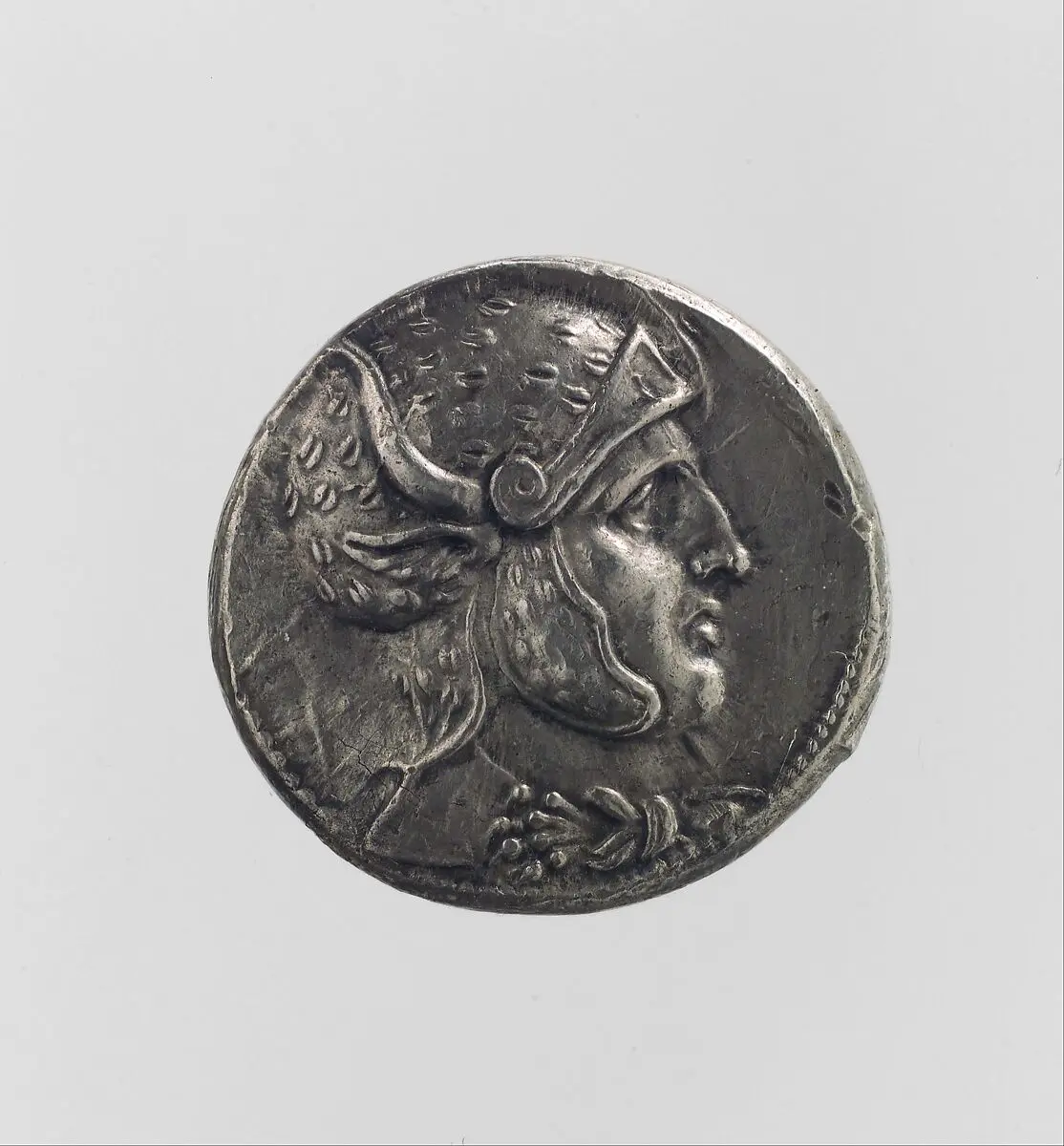
These cultural and symbolic images do not depict Dorehami members or events.
Image and licence
Tetradrachm of Seleucus I — The Metropolitan Museum of Art collection image — Public Domain · WebP / crop
What period do we call “Seleucid”?
Alexander died in 323 BCE, beginning the struggles among his successors, but the Seleucid Era counted from Seleucus’ return to Babylon in 312. He controlled parts of eastern Iran by 308 and gained extensive Syrian territories after Ipsus in 301. The kingdom’s end in Syria in 64 BCE does not date the end of Seleucid rule in every Iranian region. Each claim therefore needs a place and decade. Greek and Roman narratives are richer for the west, while evidence from the east is more fragmentary.
Source: Encyclopaedia Iranica — Seleucid Empire, The Met — The Seleucid Empire (323–64 B.C.), Encyclopaedia Iranica — Arsacids ii. The Arsacid Dynasty
From Alexander’s successors to a far-reaching kingdom
Seleucus I was a Macedonian commander who rebuilt his base in Babylon during the Successor wars. His realm stretched from the Mediterranean to parts of Central Asia, but it was not a uniform state exercising equal control everywhere. Routes, treasuries, armies, travelling courts and arrangements with local elites held it together. Antiochus I, whose mother was Iranian, governed the “Upper Satrapies” as co-ruler from 292 BCE. A family connection should not be turned into evidence of universal acceptance or one shared cultural identity.
Source: Encyclopaedia Iranica — Seleucid Empire, The Met — The Seleucid Empire (323–64 B.C.)
Satrapies, court and transformed continuity
The Seleucids continued large satrapal units rooted in Achaemenid government, but in altered forms. Satraps collected tribute, raised troops and kept order, while the “Friends of the King” received offices, commands and estates at court. Greeks and Macedonians were prominent at the upper levels of court and army, yet the monarchy also addressed different cities and populations through local languages, rites and expectations. Administrative continuity does not mean unchanged Achaemenid institutions or equal power. Court policy and local implementation need separate examination.
Source: Encyclopaedia Iranica — Seleucid Empire, Encyclopaedia Iranica — Seleucid Economy
Cities, military settlement and regional difference
Founded or renamed cities mattered along roads, river crossings and military hubs. Ecbatana was the principal Seleucid base in western Iran, a royal residence and mint, and remained in their hands until at least about 150 BCE. Rhagae and Hecatompylus were important northern strongholds. Susa shows urban growth and more coin use in the later third century, although scholarship does not treat the cause or Antiochus III’s role as certain. Greek-style poleis were rare in Persis itself. One model of urban life should not be projected across all Iran.
Source: Encyclopaedia Iranica — Seleucid Empire, Encyclopaedia Iranica — Susa iv. The Hellenistic and Parthian Periods, Encyclopaedia Iranica — Cities iii. Administration and Social Organization
Hellenism, languages and local traditions
Seleucid court art and culture had conspicuous Greek and Macedonian features, but “Hellenistic” does not mean that Iranian and Mesopotamian cultures were wholly replaced. Babylonian records show the continuity of scribes, temples and local rites, and kings could act as traditional rulers in Babylon. Greek operated alongside Aramaic and Iranian languages in many regions, with very different reach in cities, villages and social groups. A Greek image or name on an object does not prove the household language or identity of everyone who made and used it.
Source: Encyclopaedia Iranica — Seleucid Empire, Encyclopaedia Iranica — Greece iv. Greek Influence on Persian Thought
A tetradrachm: royal image, payment and evidential limits
The Met’s silver tetradrachm of Seleucus I, object 1974.105.9, is dated about 304–294 BCE and assigned to Pasargadae. Its image is a medium of royal authority, not an unmediated portrait or a photograph of an event. The Seleucid economy needed coin to pay armies and increasingly collected taxes in money. Yet Alexander coinage and issues of other states continued to circulate, while Seleucid silver gained its share gradually. A coin find establishes presence or circulation; it does not identify the owner, language or political loyalty of an entire region.
Source: The Met — Tetradrachm of Seleucus I, 1974.105.9, Encyclopaedia Iranica — Seleucid Economy
Eastern contraction and Antiochus III’s limited return
Between roughly 250 and 235 BCE, the Seleucids lost large parts of their Iranian possessions as Bactria separated and power shifted in Parthia; the exact sequence remains disputed. Arsaces took the royal title around 247, and the Parni occupied Parthia about 238. Antiochus III’s eastern campaign around 209 achieved some successes, but the ensuing settlements left Parthia and the Greco-Bactrian kingdom effectively independent. “Reconquest” should not be read as lasting direct control of every eastern town and village.
Source: The Met — The Seleucid Empire (323–64 B.C.), Encyclopaedia Iranica — Arsacids ii. The Arsacid Dynasty
Several regional endings, not one sudden frontier
Seleucid influence in Iran has no single end date. The Parthians took Media in the later part of 148 BCE, while Seleucia on the Tigris was lost in 141. Antiochus VII recovered parts of Babylonia and Media in 130, but was defeated and killed in 129; thereafter the Seleucid state was no longer an effective eastern rival. Persis and Susa followed different paths through local dynasties and coinages. For optional family study, make columns for region, latest Seleucid evidence, successor power and uncertainty. This is an exercise, not a definitive border map or a real Dorehami event.
Source: Encyclopaedia Iranica — Susa iv. The Hellenistic and Parthian Periods, Encyclopaedia Iranica — Arsacids ii. The Arsacid Dynasty
How to explore this period
Read the sources with attention to author, date and evidence. Regional branches may have different time boundaries.
Connect government, succession, towns, architecture, trade, art and everyday life. A ruler does not represent the whole population.
Sources and review date
Sources checked on 22 October 2026.
- Encyclopaedia Iranica — Seleucid Empire
- The Met — The Seleucid Empire (323–64 B.C.)
- The Met — Tetradrachm of Seleucus I, 1974.105.9
- Encyclopaedia Iranica — Seleucid Economy
- Encyclopaedia Iranica — Susa iv. The Hellenistic and Parthian Periods
- Encyclopaedia Iranica — Arsacids ii. The Arsacid Dynasty
- Encyclopaedia Iranica — Cities iii. Administration and Social Organization
- Encyclopaedia Iranica — Greece iv. Greek Influence on Persian Thought