
The Safavids
The Safavids rose to power in the early sixteenth century. Book arts, textiles and architecture offer paths into the period, alongside changing capitals and trade connections.
From 1501, with the main period ending in the early eighteenth century
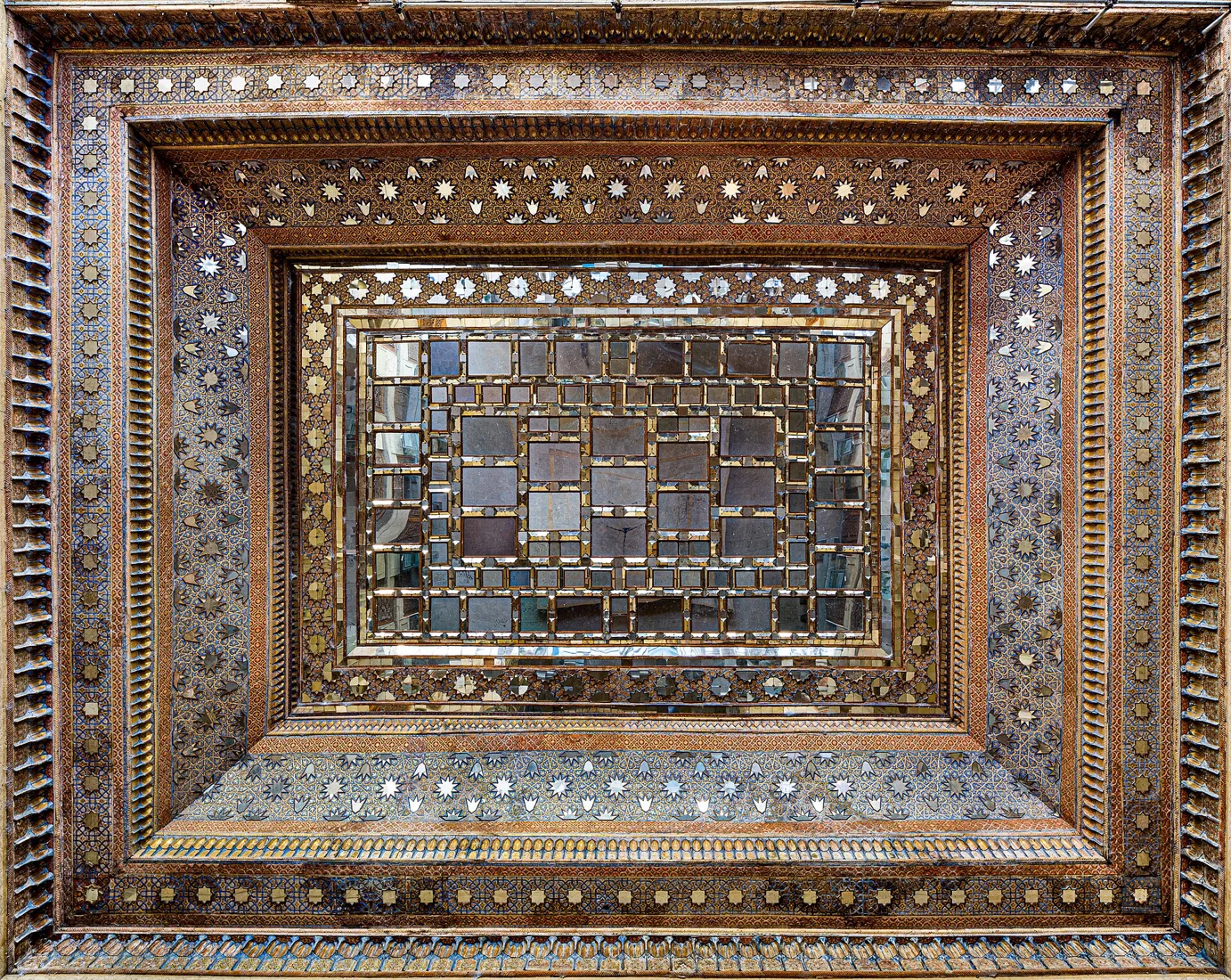
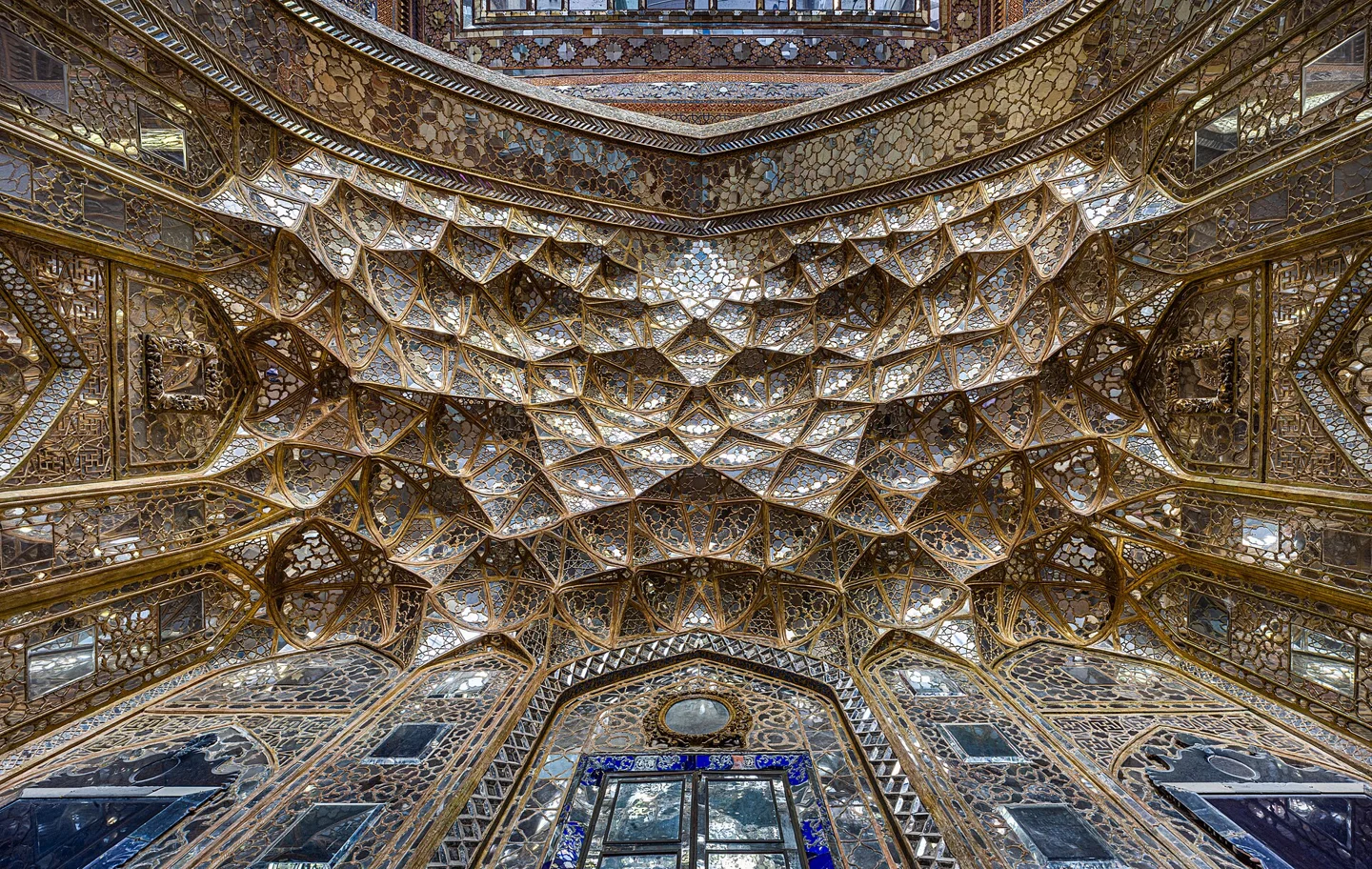
These cultural and symbolic images do not depict Dorehami members or events.
Image and licence
File:Chehel Sotoun ceiling.jpg — Amir Pashaei — CC BY-SA 4.0 · WebP / crop

File:Ceiling of Chehel Sotoun.jpg — Amir Pashaei — CC BY-SA 4.0 · WebP / crop

From the Ardabil order to a dynasty
The Safavids emerged from a hereditary order centred on Ardabil. Iranica explains that the order was initially Shafi‘i and Sunni and that its identity and network changed gradually. The beliefs and state structures of the sixteenth century should not therefore be projected unchanged onto the earliest generations. Record a text’s date and author, and distinguish terms such as order, Qizilbash and state. Continuity of a family name does not establish continuity of institutions or belief.
Source: Encyclopaedia Iranica — Shiism in Iran since the Safavids
Tabriz in 1501 and the Battle of Chaldiran
Ismail entered Tabriz in 1501, took the throne, issued coinage in his name and proclaimed Twelver Shiism as the state religion. Together, these actions describe political foundation more clearly than a single date. Defeat by the Ottomans at Chaldiran in 1514 exposed limits of Qizilbash cavalry against firearms, but did not end the state. Separate the battle itself from its longer consequences and from later heroic narratives.
Source: Encyclopaedia Iranica — Islamic History, Safavids, Encyclopaedia Iranica — Safavid Administration
Qizilbash, bureaucracy and Shah Abbas’s reforms
Safavid government was not produced by one uniform group. Iranica describes cooperation and tension among Qizilbash chiefs, Persian-speaking administrators and court ghulams. Shah Abbas I expanded ghulam, musketeer and artillery forces and reorganized offices and the army to reduce royal dependence on Qizilbash amirs. Ethnic or administrative labels must not substitute for individual experience; office, date, region and evidence type matter for each conclusion.
Source: Encyclopaedia Iranica — Islamic History, Safavids, Encyclopaedia Iranica — Safavid Administration
Isfahan as capital and urban stage
Shah Abbas I moved the capital to Isfahan in 1597–98, where the square, bazaar, palaces and religious buildings were joined in a larger urban project. UNESCO describes Meidan Emam as a significant urban space defined by major buildings on four sides. Its architecture provides evidence about organizing power, ritual and trade, not equal prosperity in every neighbourhood. “Safavid Isfahan” should not be reduced to one construction moment or only to the court.
Source: Encyclopaedia Iranica — Islamic History, Safavids, UNESCO — Meidan Emam, Esfahan
Silk, New Julfa and trading networks
Silk mattered to Safavid revenue and diplomacy. Shah Abbas relocated Armenian communities to New Julfa; Armenian merchants became prominent in long-distance networks, but forced movement and later commercial agency are not the same thing. Caravanserais, roads and workshops formed part of the network, and the Met notes weaving factories in Yazd and Kashan. A luxurious court textile alone cannot establish every producer’s wages or everyday clothing.
Source: Encyclopaedia Iranica — Islamic History, Safavids, The Met — The Arts of Iran, 1600–1800, The Met — Silk Textiles from Safavid Iran, 1501–1722
Books, carpets and intersecting visual languages
In the sixteenth century, artists from Timurid and Turkmen workshops brought experience in book arts, calligraphy and object making to Safavid courts. During the seventeenth century, carpet design became more professionalized, while European prints, books and oil paintings influenced some artists. Patrons were not limited to the shah: wealthy urban residents, Armenian merchants and foreign travellers also participated. Stylistic resemblance alone does not prove a workshop location or maker’s identity.
Source: The Met — Art of the Safavids before 1600, The Met — The Arts of Iran, 1600–1800
Chehel Sotoun and the limits of these images
Shah Abbas II added halls and large wall paintings to Chehel Sotoun. The two photographs on this page show details of the mirrored and painted ceiling in this public heritage site; they are not views of the whole palace, seventeenth-century court life, members’ homes or a Dorehami event. Photographer, licence and original link appear with the images. They support observation of geometry, materials and light, while repair dates and room functions require separate architectural evidence.
1722, 1736 and the question of an “ending”
The siege and fall of Isfahan in 1722 shattered Safavid central authority, but Safavid claimants and the dynastic name did not vanish immediately. Tahmasp II recovered territory with Nader’s support, and Nader was formally crowned in 1736. The fall of a capital, the breakdown of central government and the end of dynastic claims therefore have different dates. Official historiography also reshaped the past through genealogies and heroic patterns; compare each narrative with contemporary evidence and later scholarship.
Source: Encyclopaedia Iranica — Islamic History, Safavids, Encyclopaedia Iranica — Safavid Historiography
How to explore this period
Read the sources with attention to author, date and evidence. Regional branches may have different time boundaries.
Connect government, succession, towns, architecture, trade, art and everyday life. A ruler does not represent the whole population.
Sources and review date
Sources checked on 21 October 2026.
- Encyclopaedia Iranica — Islamic History, Safavids
- Encyclopaedia Iranica — Safavid Administration
- Encyclopaedia Iranica — Shiism in Iran since the Safavids
- Encyclopaedia Iranica — Safavid Historiography
- The Met — Art of the Safavids before 1600
- The Met — The Arts of Iran, 1600–1800
- UNESCO — Meidan Emam, Esfahan
- The Met — Silk Textiles from Safavid Iran, 1501–1722